Article

Introduction
Growing up, I had a friend in high school whose parents owned a cabin at Bear Lake, a common retreat for Utahns. We made iconic memories there with his family, spending days on the water and evenings in the nearby town, soaking up the buzz of summer and the famous raspberry shakes But there was a phrase I heard constantly from his parents: they were heading up to the lake to do some work on the house. A loose railing. A leaky pipe. Winterizing. De-winterizing. Stocking the fridge. Cleaning up after the last set of guests. Prepping for the next.
I was grateful his family had invested in a place everyone loved. But I could also see the cost, and I don't mean the mortgage. A vacation home is a real asset that demands real time, and that time usually gets paid out of the very weekends the house was supposed to create. The house gave everyone else a weekend; for the owner, it often created a checklist.
The Second-Home, Second-Job Problem
Years later, I watched my father go through a more extreme version of the same story with a home in Costa Rica. The Bear Lake cabin was a two-hour drive. Costa Rica was a flight, a rental car, a different legal system, a different language, and a different set of trades to coordinate from afar.
Every issue that would have been a Saturday errand at home became a multi-week project. And for busy owners, the issue is rarely whether they can afford to solve the problem. It is whether they have the time, trust, and local context to solve it well. Finding a reliable contractor. Wiring a deposit internationally. Trusting that the work was actually done. Dealing with the property tax notice that arrived in Spanish while he was sitting in an office in Utah.
This is the part of second-home ownership the brochures never show. The house doesn't stop existing when you're not there. Lawns grow, AC units fail, pools turn green, guests leave dishes in the sink, and someone has to answer for all of it. If that someone is you, your dream home quietly turns into a second job, one with no PTO and a boss who lives in your phone.
The Spectrum of Options
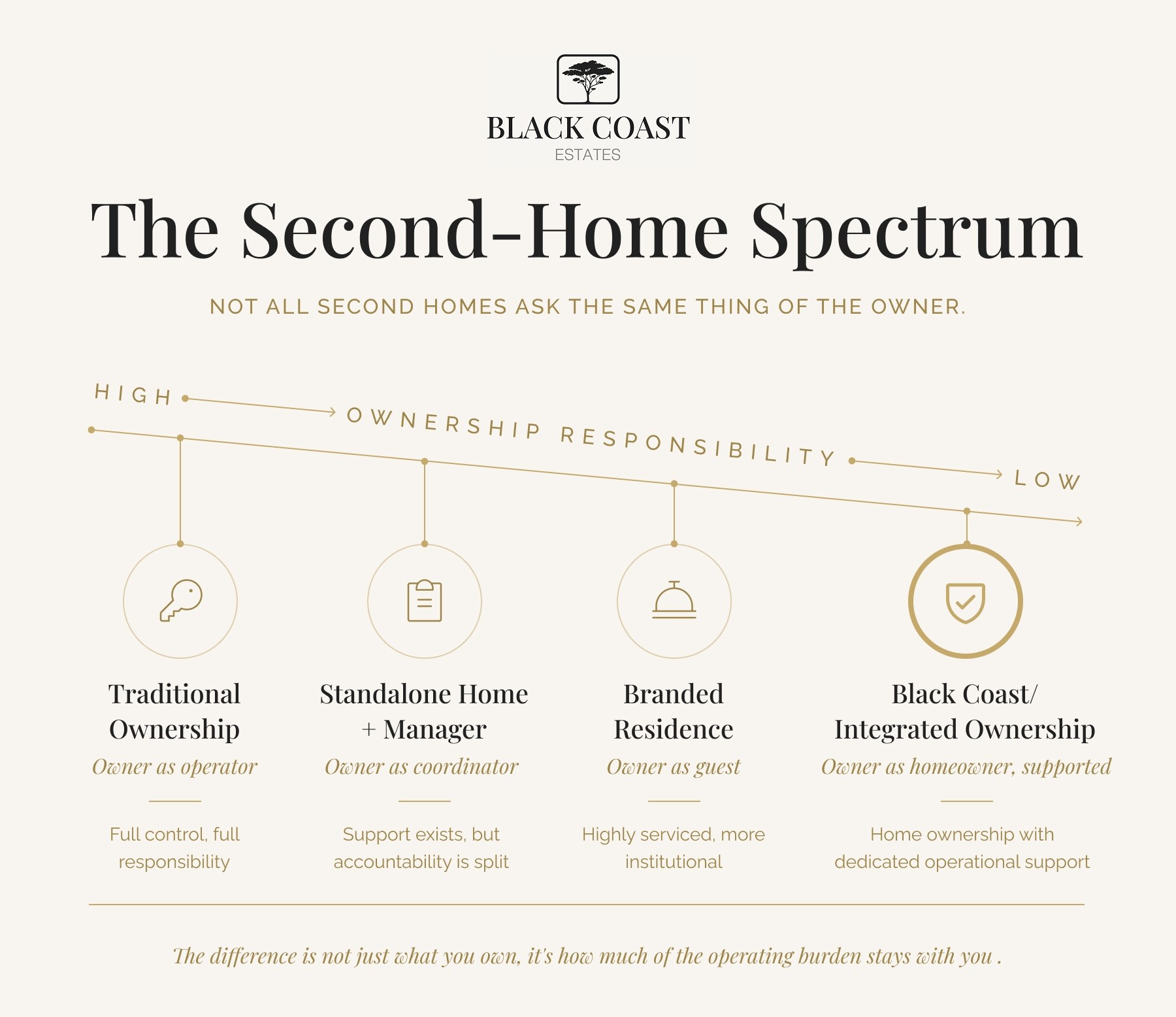
The good news is that you no longer have to choose between owning a second home and owning a second job. There's a real spectrum of ownership models, and it's worth understanding where each one sits. The difference is not just what you buy. It is who carries the operational burden after closing.
Traditional ownership.
You buy the house, you run the house. Maximum control, maximum responsibility. This is the Bear Lake and Costa Rica model I just mentioned. It works for some people, usually the ones who genuinely enjoy the projects, but for most owners, this is where the second-home dream starts to feel like asset management. .
Branded residences.
Four Seasons, Ritz-Carlton, Aman. You buy into a condo attached to a luxury hotel, and the hotel runs the operation. The experience is excellent and consistent, but the tradeoff is scale and structure. You are paying for the brand, the lobby, the operating platform, and the premium that comes with them. For some buyers, that is exactly the point. For others, it can feel more like owning a suite in a luxury hotel than having a true private home.
Standalone homes with a management company.
You buy a one-off property and hire a third-party manager to handle the day-to-day. Better than doing it yourself, but you're now in a triangle: you, the developer who built the home (and is long gone), and the management company who inherited it. When something breaks, accountability tends to break with it.
Where Black Coast Fits
Black Coast was built for the space in between. We're the developer and the designer of the homes we sell, and we're also the team on the ground operating them. There's no handoff from one company to another, no finger-pointing between the people who built the home and the people running it. The same names and faces you meet at purchase are the ones you'll see on every visit after.
That continuity matters because accountability is what turns a vacation home back into a vacation. When the AC goes out the night before your family arrives, or a storm damages an exterior detail while you are back in the U.S., you don’t want to be triangulating between a developer in one country and a property manager in another. You want one number, one team, and a clear answer. We've also built the support structure around ownership to remove the friction that made my father's Costa Rica experience so hard. We work with the top law firm in San José on title, structuring, and ongoing legal matters, so the legal side is handled by people who do this every day in this jurisdiction. And we keep in-house staff whose only focus is Black Coast owners, not a rotating roster of unrelated properties.
The Real Question
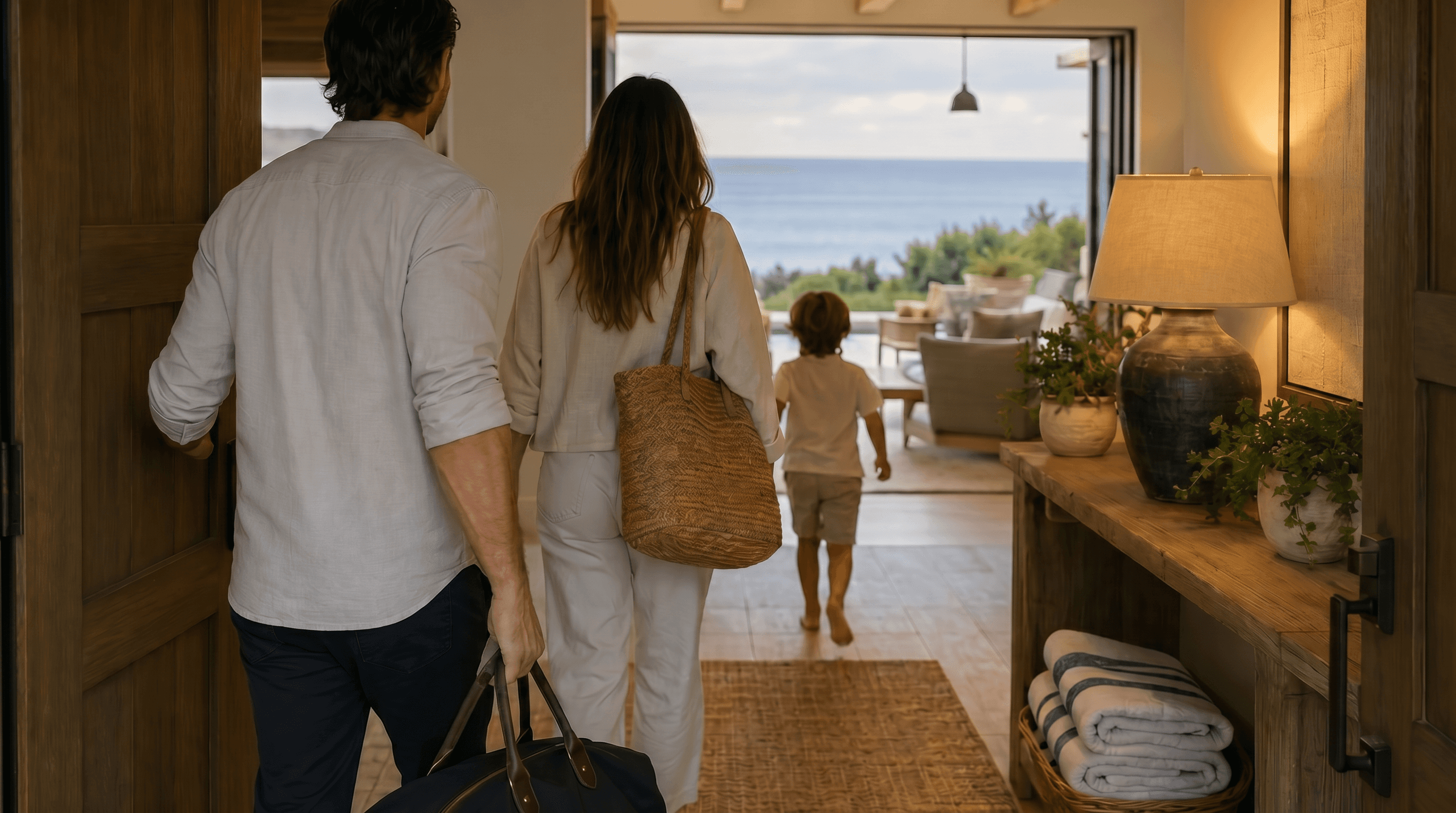
When you imagine your second home, ask yourself what you actually want to own: the property, or the experience the property creates? If it's the experience (the long weekends, the kids at the pool, the dinners that go too late), then you want as little of the operating job as possible standing between you and that.
A second home should give you more time, not take it. That's the version of ownership we're building.

