Article


Introduction
Costa Rica is home to roughly six percent of the world's biodiversity, packed into a country smaller than Lake Michigan. It generates more than 98 percent of its electricity from renewable sources. It has more bird species per square mile than almost anywhere on Earth.
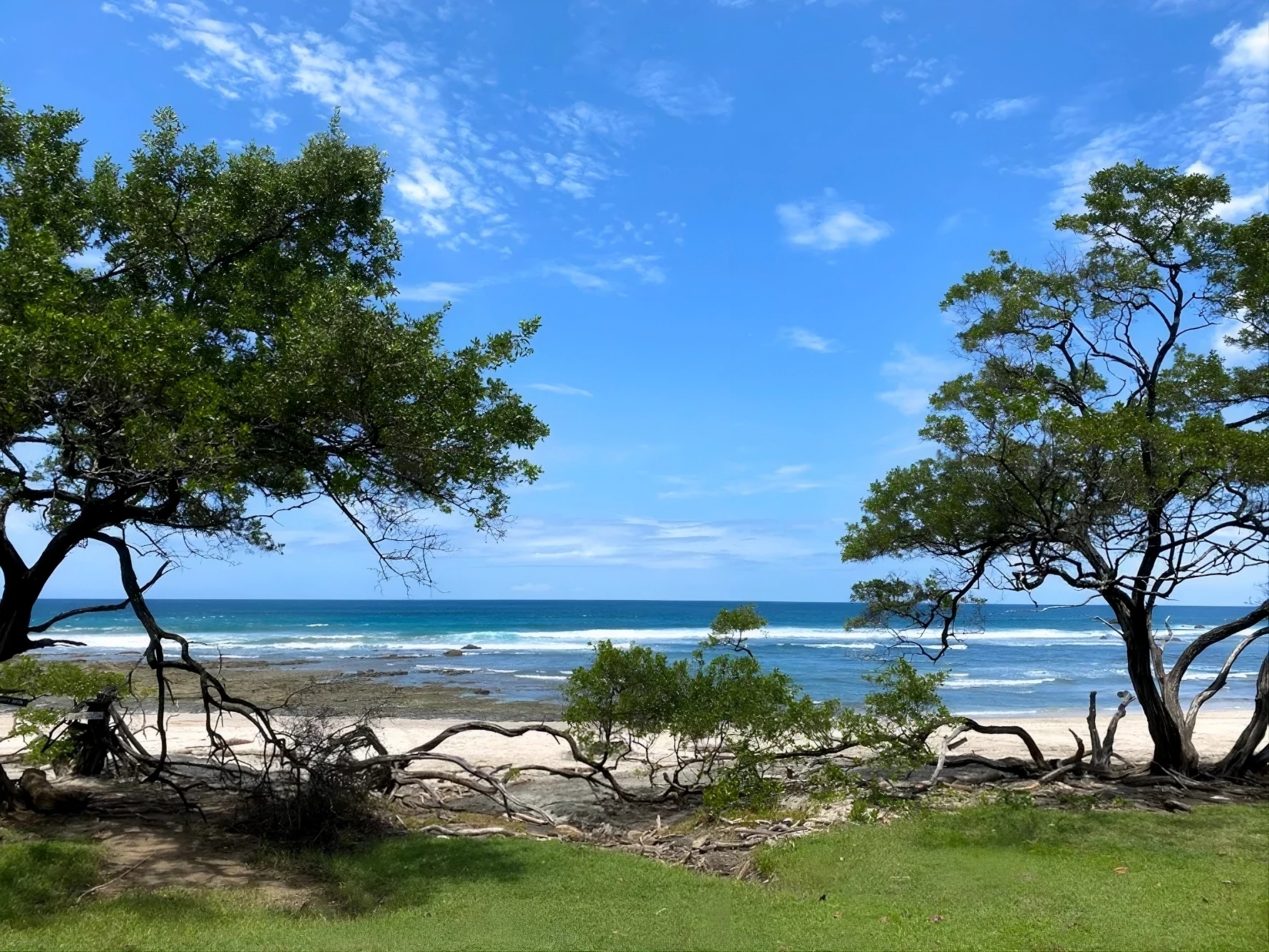
And tucked into the rural Pacific coast of Guanacaste, along the black sand shores of Playa Negra, sits Black Coast Estates.
A development built not in spite of this landscape, but in deep respect of it.
From the beginning, the vision for Black Coast Estates has been to live within the landscape rather than replace it. The site is filled with mature Guanacaste trees that were carefully preserved during development, and our commitment to the environment runs so deep that our logo is a hand-drawn illustration of one of the very trees on the property.
Nature isn't an amenity. It's a neighbor.
The Guanacaste Trees: Costa Rica's National Symbol, Our Logo's Inspiration
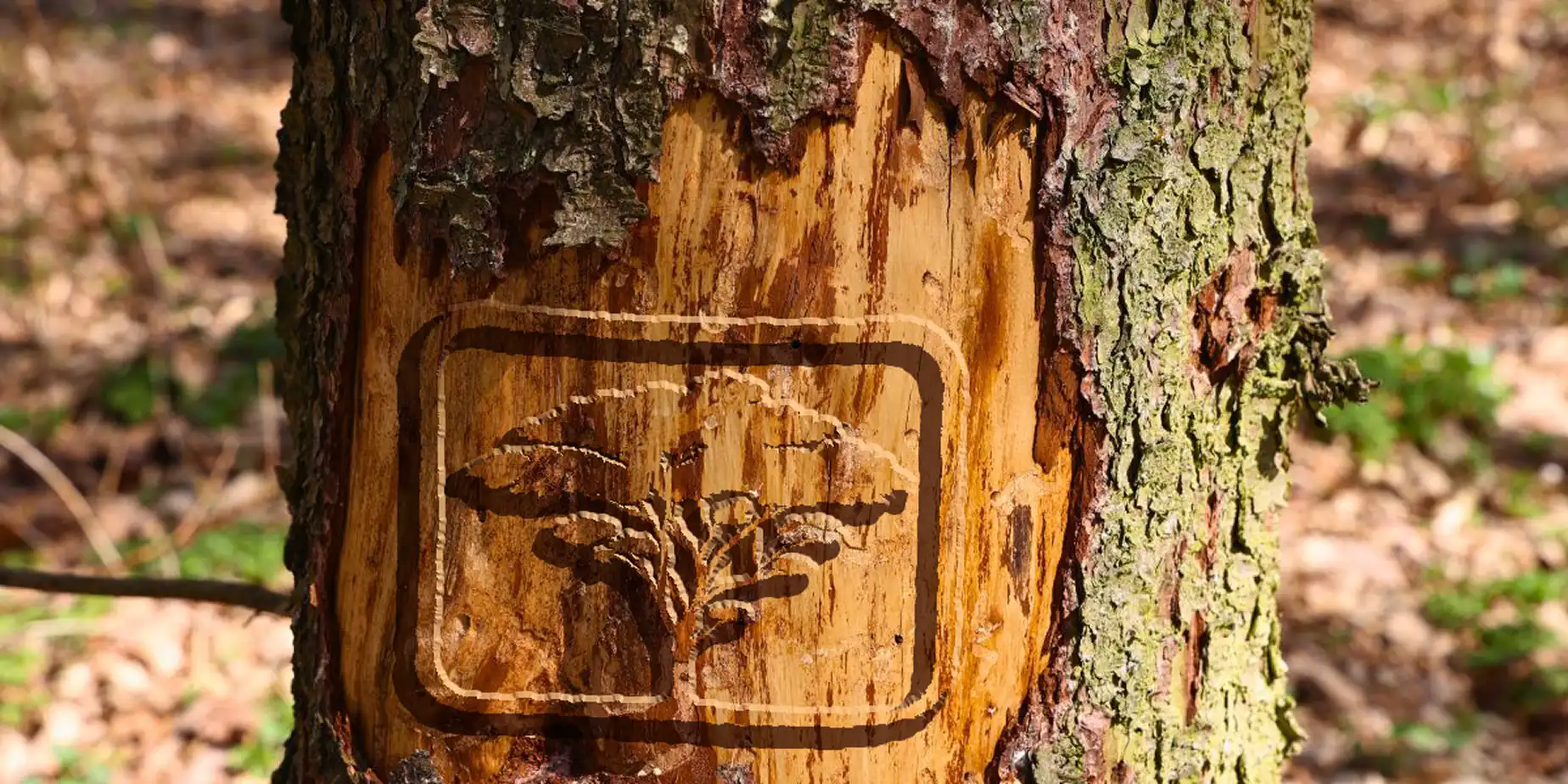
The towering Guanacaste tree, Costa Rica's national tree since 1959, is one of the most majestic species in the tropical dry forest. Nicknamed the 'elephant ear tree' for the shape of its curling seed pods and known scientifically as Enterolobium cyclocarpums, a mature Guanacaste can reach over 100 feet in height, with a canopy spreading even wider. They are living landmarks, offering vast umbrellas of shade that shelter everything beneath them from the intense Pacific sun.
When Black Coast Estates was being developed, every effort was made to preserve the mature Guanacaste trees that had been growing on the property for decades. Rather than clearing the land and starting over, the development was designed around these trees: roads curved to avoid root systems, lot lines were drawn to keep canopies intact, and construction was planned to protect as many of them as possible. The result is a community that feels established from the moment you arrive, shaded by trees that have been standing long before any foundation was poured.
These trees are far more than beautiful. As a nitrogen-fixing species, they enrich the soil around them, supporting the growth of surrounding vegetation. Their massive canopies create microhabitats for howler monkeys, macaws, iguanas, and countless species of insects and birds. Our hand-drawn logo, a sketch of one of the actual Guanacaste trees on the property, is our daily reminder that the land came first, and the best thing we could do was let it stay.
Monkeys in the Canopy, And Trails to Keep Them There
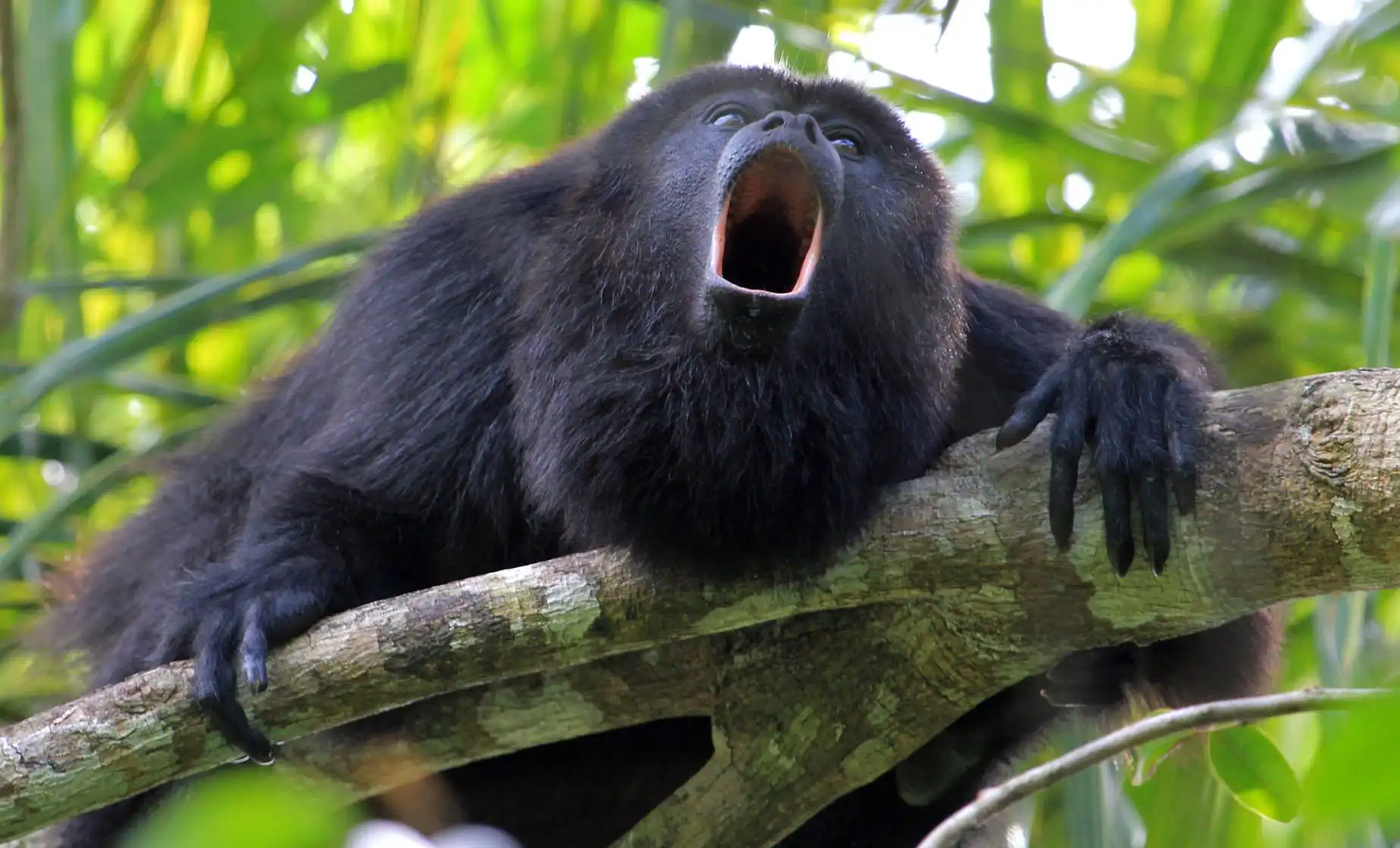
Wake up at Black Coast Estates and you may hear them before you see them. Mantled howler monkeys, one of the loudest animals on the planet with calls that carry up to three miles through the forest, are frequent visitors to the property. Guanacaste is home to three of Costa Rica's four monkey species: howler monkeys, white-faced capuchin monkeys, and spider monkeys. All three have been spotted in the trees that canopy the area around Playa Negra.
Howler monkeys travel in troops of ten to twenty, moving through the upper branches at dawn and dusk, foraging on leaves, fruit, and flowers. The capuchins are smaller and famously clever, considered the most intelligent monkeys in the Americas, while spider monkeys are the largest, with long limbs built for swinging high through the primary canopy.
Watching a troop navigate from tree to tree at sunset is one of those quiet, extraordinary moments that never gets old. After a while, it stops feeling unusual. That may be the strangest part.
To protect this daily spectacle, Black Coast Estates preserved dedicated monkey pathways throughout the property, allowing the monkeys to move freely through the canopy without being forced to the ground. As development expands in coastal Costa Rica, connected tree corridors are increasingly vital for primate populations that depend on continuous overhead routes for feeding, socializing, and avoiding predators. At Black Coast Estates, the monkeys don't just pass through. They live here.
Scarlet Macaws: A Comeback Story Unfolding Overhead
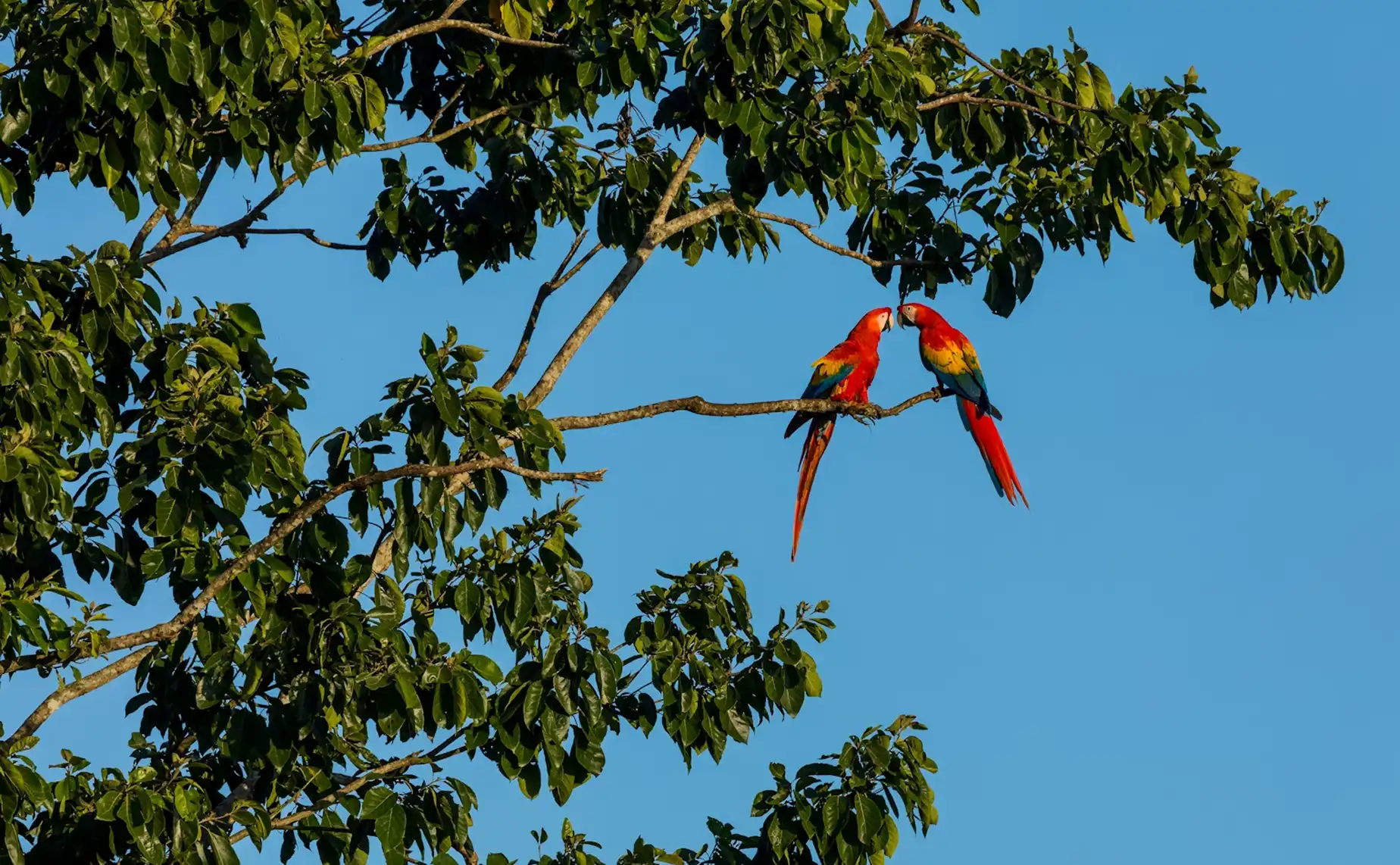
Few sights in the natural world rival a pair of scarlet macaws cutting across a blue Pacific sky, flashes of crimson, cobalt, and gold trailing behind them like living brushstrokes. At Black Coast Estates, it's a sight you'll see regularly. These magnificent birds, which mate for life and almost always fly in pairs, have made a remarkable return to the Guanacaste coastline after decades of absence.
By the 1960s, poaching and deforestation had driven scarlet macaws out of Guanacaste entirely. Forests were cleared for plantations and livestock, and the birds' nests were raided to supply the exotic pet trade in Europe. But Costa Rica's aggressive conservation efforts over the past several decades, including a nationwide commitment to reforestation and the work of organizations like the Macaw Recovery Network on the Nicoya Peninsula, have brought the macaws back. Beginning with organized releases in 2019, captive-raised macaws were reintroduced into the coastal forests of Guanacaste, and the population has been growing ever since.
You'll often hear them before you spot them: a loud, raspy call that carries across the treetops. Look up, and you'll find them perched in the almond and Guanacaste trees near the coast, exactly the kind of mature canopy that Black Coast Estates was designed to protect. Their presence here is a living measure of the health of this ecosystem.
Sea Turtles, Tide Pools, and the Wildlife Next Door
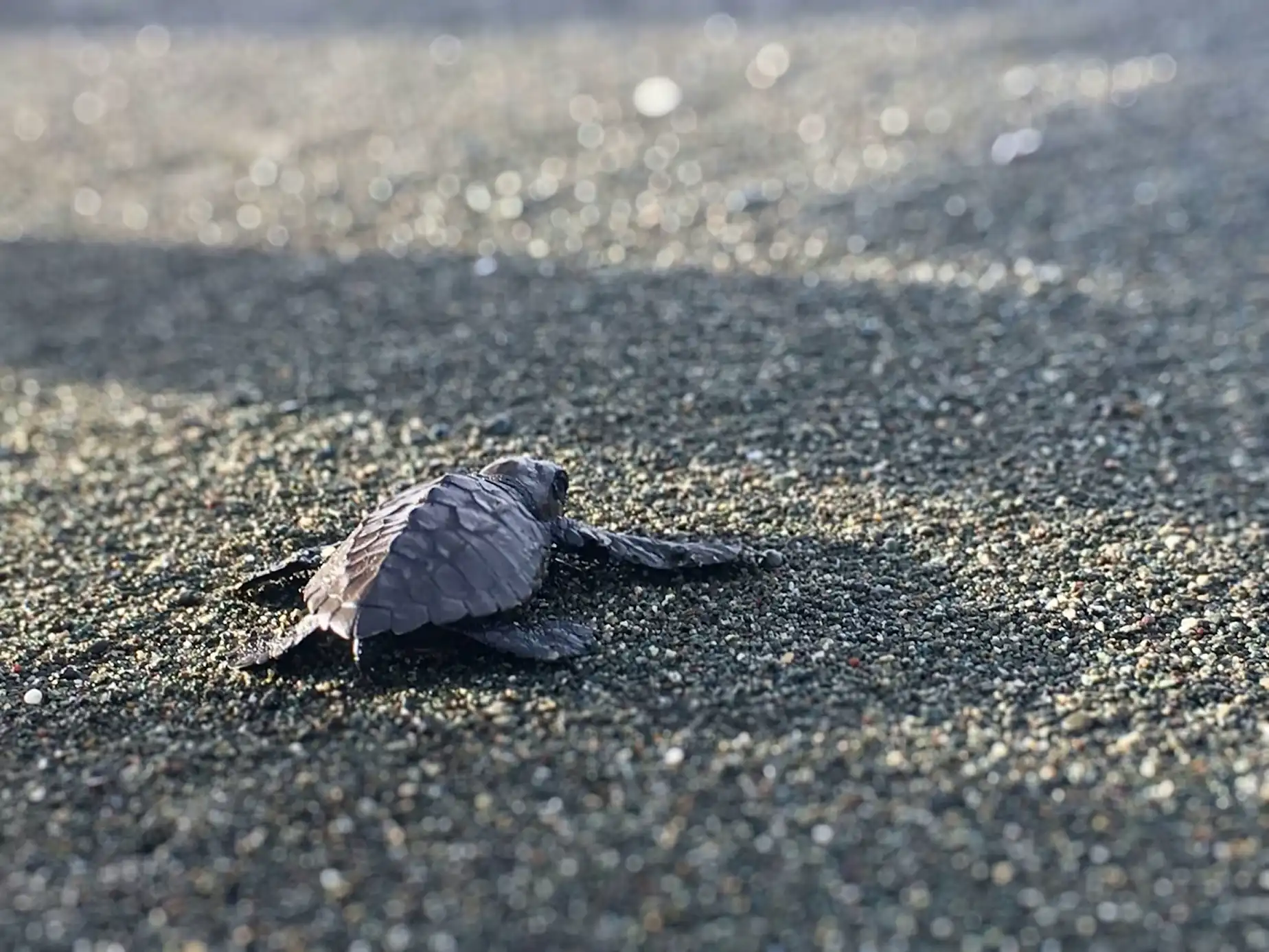
Just steps from Black Coast Estates, the Pacific coastline comes alive with one of nature's most moving events: sea turtle hatchings. The beaches near Playa Negra are part of a broader nesting corridor along the Nicoya Peninsula, and nearby Ostional Wildlife Refuge is one of only a handful of places in the world where mass nesting events, called arribadas, occur. During these events, tens of thousands of olive ridley sea turtles come ashore to lay their eggs, a spectacle that draws researchers and nature lovers from around the globe.
Marino Las Baulas National Park, about an hour north, protects critical nesting habitat for leatherback sea turtles, the largest of all sea turtle species. Turtle season runs from roughly July through December, with peak nesting from October to November. Guided tours at dawn or dusk offer residents and visitors the chance to witness hatchlings making their first journey to the ocean, an experience that changes the way you think about where you live.
Beyond the turtles, the surrounding area brims with life. The rocky outcrops and tide pools along Playa Negra's shoreline are filled with life. Iguanas bask on sun-warmed rocks overhead, coatis move through the dry forest in small groups, and dolphins are a common sight offshore. Humpback whales pass through the offshore waters during migration season, and dolphins are a common sight on catamaran trips. Palo Verde National Park, accessible by boat, opens into a world of wetlands and mangroves home to nearly 300 bird species, from roseate spoonbills to jabiru storks, as well as crocodiles and the famous basilisk "Jesus Christ" lizard, so named for its ability to sprint across the surface of the water.
A Country Built on Conservation
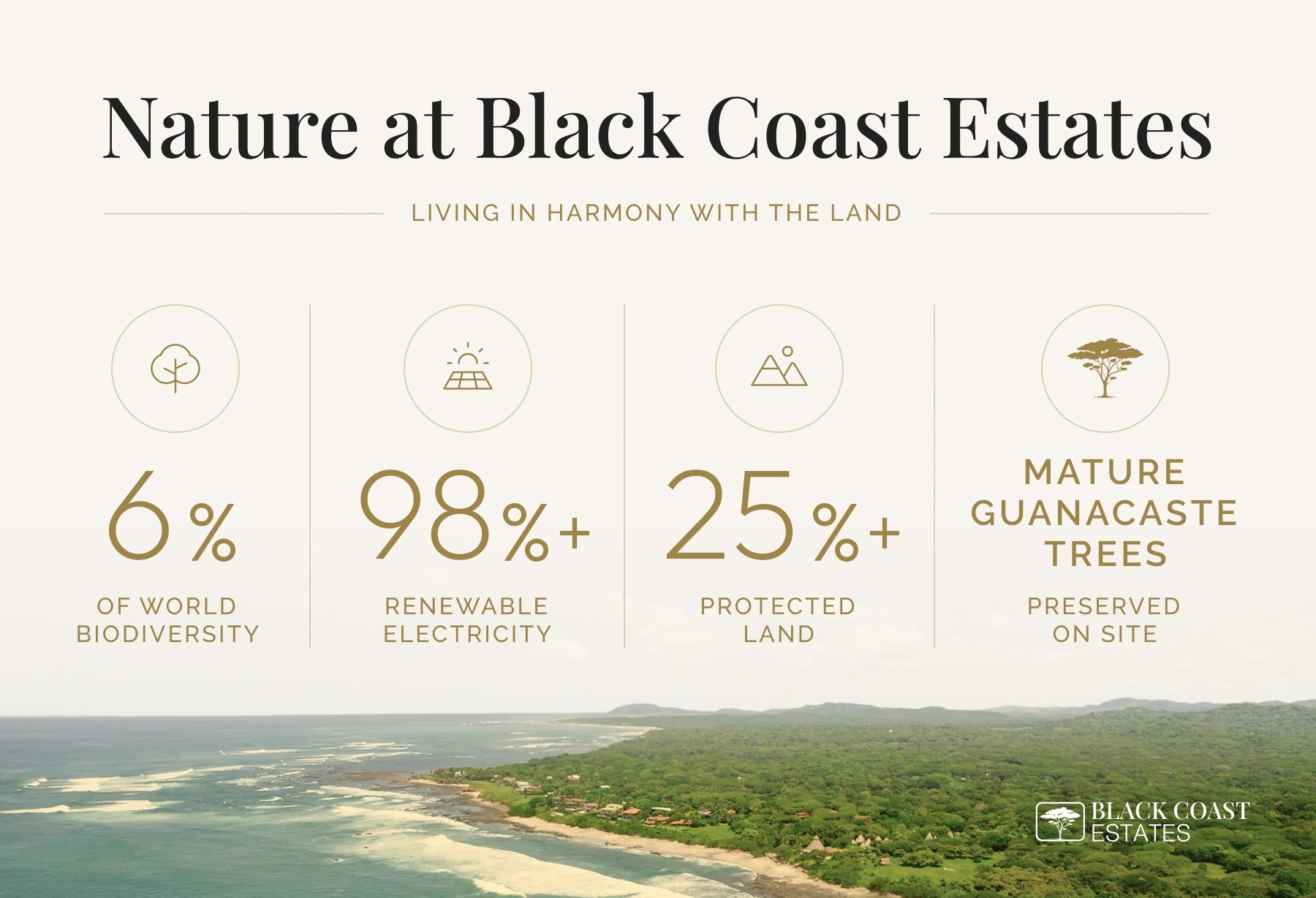
Black Coast Estates sits in a country that takes conservation more seriously than almost any nation on Earth. Despite covering less than 0.03 percent of the planet's surface, Costa Rica is home to roughly six percent of the world's known biodiversity: over 500,000 species of flora and fauna. It hosts more than 900 species of birds, over 12,000 plant species, and 1,200 species of butterflies. Six species of wild cats, including jaguars, pumas, and ocelots, roam its protected forests.
Costa Rica generates more than 98 percent of its electricity from renewable sources, primarily hydropower, wind, and geothermal energy, and has done so consistently since 2014. Very few countries this beautiful take conservation this seriously.
The country has pledged to fully decarbonize its economy by 2050 and was among the first nations to announce a ban on fossil fuels. Over a quarter of the country's land is protected in 29 national parks, 19 wildlife refuges, and eight biological reserves. Its pioneering Payments for Environmental Services program compensates landowners who maintain forested land, directly linking economic incentives to ecological preservation.
Guanacaste, the province Black Coast Estates calls home, embodies this ethos. It's rural, unhurried, and deeply connected to the natural world. The tropical dry forest ecosystem here is one of the most endangered habitats in Central America, yet Costa Rica's conservation laws have helped preserve large swaths of it. Rincon de la Vieja National Park, with its volcanic hot springs and over 34,000 acres of wildlife habitat, is a short drive away. Santa Rosa National Park protects some of the last remaining tropical dry forest in the world. This is not a place where nature has been pushed to the margins. It's the main event.
Living Among It
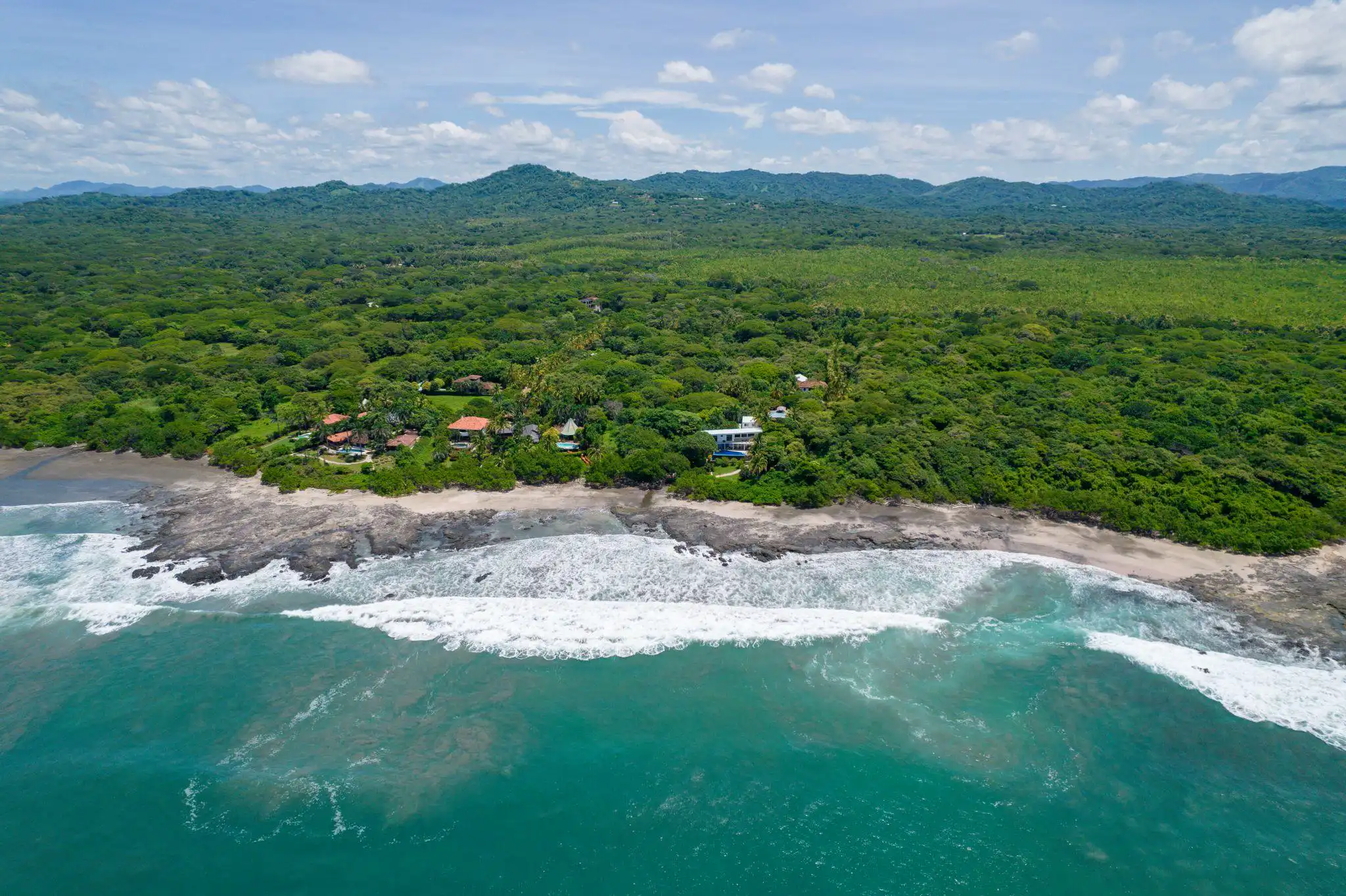
At Black Coast Estates, the relationship between development and nature isn't a tradeoff. It's the entire point. The Guanacaste trees that shade your morning coffee were here long before the property lines were drawn. The monkeys swinging through the canopy overhead follow the same routes their ancestors traveled. The scarlet macaws that streak across the sky at dusk are part of a recovery story that this stretch of coastline is actively writing.
We didn't build next to the jungle. We built inside it: carefully, intentionally, and with the understanding that the best thing about this place isn't anything we constructed.
It's everything that was already here.